What Does a Per-Shelf Weight Rating Mean?
The weight capacity per shelf is the maximum load one shelf is rated to hold under stated conditions, often with weight spread evenly. Choose a rack by matching that limit to your heaviest planned shelf load.
On this page (8 sections)
- What is the weight capacity per shelf?
- How do shelf and total capacity differ?
- How should you choose a shelf capacity?
- How should weight be spread across a shelf?
- What affects a shelf's safe working load?
- How do you set up and care for a loaded rack?
- What mistakes should you avoid?
- Which rack should you choose?
The weight capacity per shelf is the maximum load that one shelf is rated to hold under stated conditions, often with weight spread evenly. To choose a rack, compare that limit with the heaviest load you expect on any single shelf, then check the full unit's limit too.
That distinction helps you avoid overloading one tier even when the rack's overall capacity looks high. The right choice also depends on the load's shape, shelf dimensions, available floor space, and how the rack is assembled.
What is the weight capacity per shelf?
The weight capacity per shelf tells you the stated load limit for one shelf under specified conditions. If the condition says evenly distributed, the rating assumes the load is spread across the shelf rather than concentrated on one small spot.
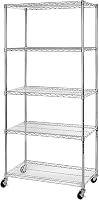
For a concrete example, Amazon Basics gives its 5-shelf wire unit a 350 lb limit per shelf when weight is evenly distributed, with a 1,750 lb total unit limit. That makes it easier to compare planned shelf loads with the stated condition.
A rating is not a promise that every point on the shelf can carry the same weight. A heavy object resting on small feet or clustered near one edge presses on a smaller area than boxes spread across the surface.
How do shelf and total capacity differ?
Per-shelf capacity applies to one tier, while total capacity applies to the assembled unit. Keep both numbers in view because staying below the total does not prevent one shelf from exceeding its individual limit.
The REIBII 55.5-inch wire unit gives a 640 lb single-tier limit and a 3,200 lb total limit across five tiers. Those figures let you plan both the load on each shelf and the combined load on the rack.
Don't assume a unit's total rating is simply the sum of its shelf ratings unless the manufacturer states that total. The frame, joints, shelf supports, and floor all carry the combined load.
A simple planning step is to list what will sit on each shelf and estimate the heaviest tier. Leave room below the stated limits for uncertainty in item weights and for loads that are hard to distribute evenly.
How should you choose a shelf capacity?
Choose a shelf rating by starting with the heaviest combination of items you plan to store on one tier. Then compare that load with the shelf limit, the total unit limit, and the product's stated loading condition.
The 79-inch-wide CCIOBTE rack is intended for buyers who need broad, deep storage and a high stated capacity: it has four tiers, a 1,500 lb per-shelf limit, and a 6,000 lb total limit. Its 79-inch width and 24-inch depth also require enough room to place and use it.
For a smaller footprint, Amazon Basics is 36 inches wide, 14 inches deep, and 72 inches high. Its 350 lb evenly distributed shelf limit suits tools, supplies, and containers that fit those dimensions; skip it if you need a wider or deeper rack or plan to exceed that tier limit.
REIBII is 55.5 inches wide, 18 inches deep, and 71 inches high, with adjustable shelves and a stated 640 lb limit per tier. It suits buyers who need adjustable spacing and more shelf capacity than the Amazon Basics unit; skip it if the footprint is too wide or the intended load exceeds its limits.
Compare shelf capacity alongside the items' dimensions. A high rating won't help if a bulky item does not fit, while adjustable height can make space for taller items without changing the shelf's load limit.
For a broader look at dimensions and layout, see garage storage shelves and how to choose garage shelving.
How should weight be spread across a shelf?
Spread items across the shelf surface instead of concentrating heavy weight in one small area. This follows the even-distribution condition used in many capacity ratings.
Place heavier items where the rack instructions recommend, and avoid stacking them on a corner or narrow strip. Wire shelves have openings, so check the rack instructions before adding any solid liner or surface.
Don't use shelf width or depth as a substitute for its stated capacity. A larger shelf offers more room, but only the stated limit tells you how much weight that shelf is rated to hold.
The guide to how much weight wire shelves can hold explains why the shelf's material and construction matter alongside how you load it.
What affects a shelf's safe working load?
A shelf's stated limit applies to the rack as designed and assembled. Missing braces, loose connections, uneven flooring, or incorrect assembly can undermine the support the rack is meant to provide.
Use the included parts and follow the assembly sequence. The CCIOBTE rack's design includes reinforced beams and lateral stabilizers, so assemble those parts as instructed rather than treating them as optional.
A rack's capacity also doesn't describe the floor's capacity or guarantee that a freestanding unit won't tip. Set it on a suitable, level surface, and read how to anchor a shelf to a wall if you need help reducing tip risk.
Assembly details matter for boltless racks as well. Follow how to put together boltless metal shelving for setup guidance, and see what boltless shelving is and whether it's sturdy enough to understand that construction style.
How do you set up and care for a loaded rack?
Assemble the rack in the position where you intend to use it if its size makes moving it difficult. Check that the floor is level, follow the instructions for locking each shelf or support in place, and confirm the unit is stable before loading it.
Load gradually, starting with heavier items low on the rack and distributing them across the shelves. This keeps the load organized and makes it easier to notice an uneven shelf or loose connection before the rack is fully loaded.
Keep the unit's stated limits available for anyone who may add items later. For the CCIOBTE rack, care instructions call for wiping with a damp cloth; for other units, follow their care instructions and keep shelves dry when appropriate.
What mistakes should you avoid?
The most common mistake is using the total unit capacity as if it were the limit for every shelf. Check each tier separately, then confirm the combined load stays within the unit's stated total.
Another mistake is treating an evenly distributed rating as permission to place one dense object anywhere. Spread loads, avoid edge-heavy stacks, and don't let a high capacity number distract from fit, assembly, or floor conditions.
Don't move shelves while they are carrying heavy items, and don't leave out a support because the rack appears stable. Adjust shelf spacing before loading, then recheck that every connection is seated as directed.
Which rack should you choose?
Choose Amazon Basics if a 36-inch-wide, 14-inch-deep rack fits your space and your heaviest planned shelf load stays within its 350 lb evenly distributed limit. Choose REIBII if you want adjustable shelf heights and a higher stated tier limit in a 55.5-inch-wide frame.
Choose CCIOBTE if you need a 79-inch-wide, 24-inch-deep rack with four tiers and a much higher stated shelf limit. Skip it if you lack room for its footprint or don't need that capacity.
The practical answer to what is the weight capacity per shelf is the limit for one tier under its stated loading conditions. Match that number to your heaviest planned shelf, confirm the whole unit's limit, and use wire shelf capacity guidance before loading heavy tools or supplies.
Frequently asked questions
Does per-shelf capacity mean the whole unit's capacity?
No. Per-shelf capacity applies to one shelf, while total capacity applies to the whole unit.
A rack's total rating may equal the sum of its shelf ratings.
Check the stated limits and loading conditions before using that number.
Does a shelf hold its rated weight anywhere?
Not necessarily. Many ratings assume the load is spread evenly across the shelf.
A heavy item concentrated in the middle or near one edge may stress the shelf differently, so follow the instructions and distribute items across the surface.
Can I add the capacity ratings of several shelves?
Only if the manufacturer states a total unit capacity that allows it. Individual shelf ratings don't by themselves confirm that the frame, connections, and floor can safely support the combined load.
Check both limits and don't exceed either.
Does anchoring increase a shelf's weight capacity?
Anchoring can help reduce tip risk, but it doesn't automatically raise the shelf's rated capacity. Use the rack's stated limit, assemble it as directed, and choose anchors suited to the wall and the unit's instructions.