What Is Boltless Shelving, and Is It Sturdy Enough?
Boltless shelving uses slotted uprights and beams that lock together without nuts and bolts. It can be sturdy enough for garage storage when assembled correctly, set on a level floor, and loaded within its stated limits.
On this page (8 sections)
- What is boltless shelving?
- Is boltless shelving sturdy enough for a garage?
- What affects a boltless shelf’s stability?
- What should you check before choosing one?
- How do you assemble boltless shelving safely?
- When should you anchor a freestanding shelf?
- What does “heavy duty” mean on boltless shelving?
- Is boltless shelving right for your garage?
Boltless shelving uses slotted uprights and beams that lock together without nuts and bolts. It can be sturdy enough for garage storage when assembled correctly, set on a level floor, and loaded within its stated limits.
The term describes how the frame connects, not its strength. The shelf material, upright design, braces, load rating, and placement all affect whether a unit suits your tools and bins.
What is boltless shelving?
Boltless shelving is a shelf frame assembled by fitting beams into slots in upright posts. The joints rely on their shape and fit rather than a row of bolts and nuts.
Some designs use teardrop slots, while others use different connectors. A mallet may help seat the parts, and some units add locking pins or other retainers.
Follow the assembly instructions because designs vary.
The shelves may be wire, metal panels, or another material. Adjustable levels let you change the space between tiers, but moving a shelf usually means lifting and reseating both beams.
Is boltless shelving sturdy enough for a garage?
Boltless shelving can be sturdy enough for many garage loads when the frame is assembled fully and used within its load rating. A loose joint, uneven floor, or concentrated load can make a frame unstable.
Look for clear limits for each shelf and for the whole unit. These are different figures: a total capacity does not tell you how much one tier can hold.
Our guide to what a per-shelf weight rating means explains how to read those numbers.
Put heavy items on lower shelves and spread weight across the tier. Avoid placing a dense object on one small spot unless the manufacturer says the shelf supports that kind of concentrated load.
A tall shelf may need an anti-tip device or wall anchor. Follow the unit’s instructions and see how to anchor a garage shelf to the wall for considerations by wall type.
What affects a boltless shelf’s stability?
The connection, bracing, floor, and load placement all affect stability. A high capacity number alone does not account for every setup.
Do the joints lock firmly?
The beams should seat fully into the upright slots. If a connection remains partly raised, the frame may rack or shift under load.
Use the assembly method in the instructions. Don’t strike the shelf surface or force a part that does not line up; check that you have the correct pieces and orientation first.
Does the frame have braces?
Diagonal braces or reinforced beams can help a frame resist side-to-side movement. Their presence and design vary, so check that all listed pieces are installed.
Keep the unit square as you assemble it. Tight, even joints matter because a leaning frame can place uneven stress on its shelves.
Is the floor level?
A shelf needs a stable base. Set it on a firm, level area and use any feet or floor protection included with the unit.
Don’t try to correct a floor slope by stacking loose scrap under one leg. If the shelf rocks, move it or use a safe, manufacturer-approved leveling method before loading it.
Is the weight spread out?
Place loads evenly across each tier and keep the heaviest items near the bottom. Avoid climbing on the shelves or using them as a work platform unless the manufacturer specifically allows it.
For wire shelves, the rating and support pattern matter too. See how much weight wire shelves can hold before storing dense items on that style.
What should you check before choosing one?
Compare the shelf’s dimensions, tier ratings, construction, and anchoring guidance with your intended storage. Measure the space and the largest items before choosing a frame.
Depth can determine whether bins sit safely without hanging over the edge. Our guide to standard garage shelf depth can help you compare common sizes and plan for your storage containers.
Check doorway clearance as well as the final footprint. A wide shelf may not pass through the garage door or an interior doorway, and it may need room to be assembled in place.
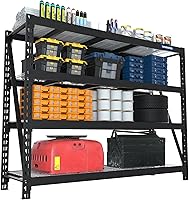
The WORKPRO unit measures 68 x 24 x 64.96 in and has 4 adjustable tiers. WORKPRO states a total capacity of 7,200 lb and 1,800 lb per tier.
It has teardrop-shaped slots, locking pins, reinforced steel parts, and floor mounting. Choose it when you need a wide, deep shelf and can accommodate its 68 in width.
The RAVIGIN shelf measures 71 x 24 x 70 in. Its maker describes one-piece columns, diagonal braces, reinforced steel shelves, and an anti-corrosion coating, with adjustable tiers and locking pins.
Choose it if the wider footprint fits and you want those reinforcement features. The stated 5,000 lb figure is total capacity, so check the instructions for any per-tier limit before loading it.
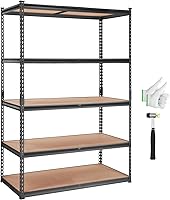
The Beaunatixx unit measures 48 x 24 x 73 in and uses a slotted, bolt-free design. Its maker states 560 lb per shelf and describes reinforced beams, double-layer columns, and foot pads.
Choose it when you need a narrower footprint and want shelves that can be adjusted or divided into separate units. Confirm the assembly steps and load limits for your intended setup.
How do you assemble boltless shelving safely?
Assemble the frame on a level surface and confirm each beam is fully seated before adding weight. Use the included instructions because slot shapes, braces, and retainers differ by model.
Lay out the parts and sort them by type before starting. Build the uprights and beams in the order shown, keeping the frame square as you go.
If the instructions call for a mallet, use it as directed and avoid striking finished shelf panels. Install every brace, pin, or foot specified in the steps, then check that the unit does not rock before loading it.
For a step-by-step walkthrough, see how to put together boltless metal shelving. Don’t skip a retainer because a joint seems tight; use the parts and method specified for your shelf.
When should you anchor a freestanding shelf?
Anchor a shelf when its instructions require it or when reducing tip risk is important for your setup. Tall units, uneven loading, and access by children can make anchoring especially worth considering.
Use an attachment suited to the wall material and follow the shelf manufacturer’s directions. A fastener that works for one wall type may not hold in another, so identify the wall construction before choosing hardware.
Keep heavy items low even when a shelf is anchored. Anchoring helps resist tipping, but it does not raise the shelf’s load capacity or make an overloaded tier safe.
What does “heavy duty” mean on boltless shelving?
“Heavy duty” is a broad label, so compare the stated capacity and construction details instead of relying on the phrase alone. Look for a per-tier limit, total limit, and clear conditions for how each number applies.
A manufacturer may describe thick beams, reinforced uprights, or diagonal bracing. Those details help explain the design, but they do not replace safe assembly and even loading.
The WORKPRO and RAVIGIN options above give both total and per-tier capacity. Compare those limits with the weight of what you plan to store, and leave room for uncertainty rather than loading right up to a maximum.
Is boltless shelving right for your garage?
Choose boltless shelving if you want adjustable tiers and a frame that assembles without standard bolts at the beam joints. Pick a unit by its dimensions, shelf rating, bracing, and anchoring instructions.
The Beaunatixx may suit a tight area, while the wider WORKPRO and RAVIGIN frames offer more shelf width. For a broader comparison of metal options, see best heavy duty metal shelving for a garage.
Measure your space, choose a shelf with limits that fit your stored items, and assemble it as directed. Boltless describes the connection method; the frame’s dependability also depends on its design, setup, and load.
Frequently asked questions
What is boltless shelving?
Boltless shelving is a freestanding shelf system whose beams fit into slots in the uprights, usually with a mallet or similar tool. The interlocking joints replace bolts and nuts at the beam connections.
Exact designs vary, so follow the assembly instructions for the unit you choose.
Is boltless shelving sturdy?
It can be sturdy for garage storage when its frame is fully seated, placed on a level floor, and loaded within the stated limits. Stability also depends on the design, shelf materials, load placement, and whether the unit needs an anti-tip device or wall anchor.
Does boltless shelving need to be anchored?
Some freestanding shelves can stand on the floor, but anchoring may reduce tip risk, especially for a tall or heavily loaded unit. Follow the unit’s instructions and use a wall attachment suited to the wall material.
Keep heavy items on lower shelves.
What is the difference between boltless and rivet shelving?
The names often describe similar systems: beams lock into slots or rivet-shaped fittings on upright frames without standard bolts at each shelf joint. The exact connection and parts vary by model, so check the assembly diagram and whether the unit includes locking pins or other retainers.