Metal vs Wood Garage Shelves: Which Lasts Longer? (October 2026)
Metal shelves usually suit damp garages better, while sealed wood is a strong option for dry spaces and custom layouts. Compare moisture, loads, shelf spans and upkeep to choose the right material.
On this page (10 sections)
- Metal vs wood garage shelves: which lasts longer?
- Which material handles heavy loads better?
- How does moisture change the choice?
- Which shelf surface works better for bins and tools?
- How do you set up and care for garage shelves?
- What mistakes shorten shelf life?
- How should you compare cost over time?
- Which metal garage shelf suits your setup?
- Which material should you choose for your garage?
- Sources for material care
Metal shelves usually handle damp garage conditions better, while sealed wood can be a durable choice in a dry space. In a metal vs wood garage shelves comparison, match the material to moisture, load, shelf span and the amount of care you can manage.
Metal won't swell from humidity, but a damaged coating can expose steel to rust. Wood avoids corrosion, though moisture can cause swelling, warping or decay when it stays wet.
Metal vs wood garage shelves: which lasts longer?
Metal is usually the better fit for garages with changing humidity or occasional dampness. In a dry, ventilated garage, protected wood can also serve for years, especially when its supports keep long spans from sagging.
Steel doesn't absorb water, but it isn't immune to corrosion. Scratches, a roof leak or a wet item left on a shelf can weaken a finish over time.
Wood's service life depends on the board, finish, span and ventilation. Sealing can slow moisture damage, but it won't make wood waterproof or increase its safe load by itself.
How to choose between metal and wood garage shelves
Choose based on the conditions and items in your garage, then confirm the shelf dimensions and supports fit your space. Start with these questions:
- Does the garage get damp, or do wet tools and gear go onto the shelves? Metal is usually easier to manage in that setting.
- Do you need a custom width or a solid surface for small parts? Wood can be cut to fit, and panels keep small objects from slipping through.
- Will heavy items sit on the shelves? Check the capacity for the complete unit, and make sure the shelf span and supports suit the load.
- How much floor and doorway space do you have? Measure the shelf location and the route the unit must take to get there.
- How much maintenance fits your routine? Metal needs coating checks; wood may need its protective finish renewed.
A hybrid rack can meet both needs. For example, a metal frame with engineered wood boards gives you a solid surface while keeping the frame metal.
Who should choose metal shelves for a garage?
Choose metal if the garage gets damp, you want a ready-made rack, or you need an adjustable layout. Coated metal is a practical choice for wet tools, boxes and garage supplies when you can keep standing water off the unit.
Metal also suits shoppers who want a shelf structure assembled from posts and beams, with set positions for adjustable shelves. If the unit is freestanding, leave room to reach it and consider whether its location calls for anchoring.
Skip a metal unit if its footprint or doorway requirement does not fit your space. Avoid placing it where a leak or regular condensation will keep it wet, and don't assume the stated capacity applies to uneven or concentrated loads.
Who should choose wood shelves for a garage?
Choose wood if the garage stays dry, you need a custom size, or a solid deck matters for small parts. Panels make a continuous shelf surface for jars, hardware and items that could catch or fall through open shelves.
Wood also fits a DIY plan where you can size each shelf to the available wall space. Plan the supports and fasteners for the actual span and load, and finish exposed surfaces and edges before the shelf is put into service.
Skip wood if the space has recurring leaks or high humidity that you can't control. It also needs more thought for long spans: thin or poorly supported boards can sag even when the total load seems modest.
Which material handles heavy loads better?
Neither material is automatically stronger; the design, span, supports and load rating decide what a shelf can hold. Use the rating for the complete unit, follow its loading instructions and spread weight across the shelf.
Metal units often pair posts and beams with panels or wire decks. They can carry substantial loads when assembled and loaded as intended, but capacity claims from different brands aren't directly comparable without the same conditions.
Wood shelves can support heavy items when the boards, span and bracing match the load. Long unsupported spans need more support, and placing a heavy item in the middle can stress the shelf more than keeping it near supports.
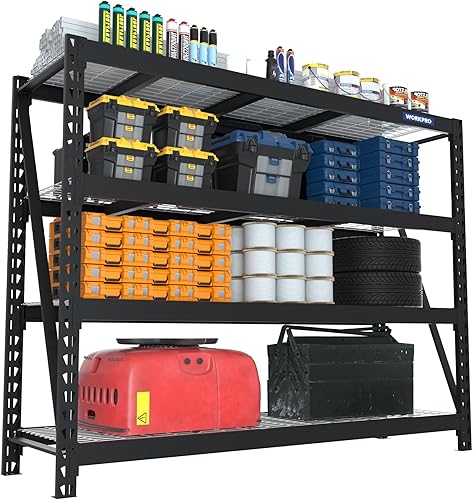
The WORKPRO unit has a claimed total capacity of 7,200 lb, with a stated 1,800 lb capacity for each tier. Follow its assembly and loading instructions, and don't treat the total as the limit for one shelf.
Check the weight rating per shelf before loading any rack. A total capacity doesn't mean one shelf can hold that entire amount.
How does moisture change the choice?
Choose metal for a garage that gets damp, and choose wood only when you can keep it dry and protected. For either material, address leaks and allow air to move around stored items.
A coating helps shield metal, but tools, sharp bin edges and repeated scraping can damage it. Wipe off water and check for chips or rust as part of routine garage upkeep.
Wood can take in moisture through unfinished edges, screw holes or worn surfaces. A suitable finish slows water uptake, but it needs care if it cracks or peels.
For seasonal condensation, leave space between shelves and a cold exterior wall. Keep bins off the floor, and don't store wet gear directly on wood boards or metal decks.
Which shelf surface works better for bins and tools?
Wood or engineered boards give small items a solid surface, while open metal shelving can improve visibility and airflow. Choose according to the items you store and whether they need to sit flat.
Solid surfaces work well for small parts, jars and containers with narrow bases. Open shelves can make it easier to see stored goods, but small hardware may need a tray or bin to prevent it from slipping through.
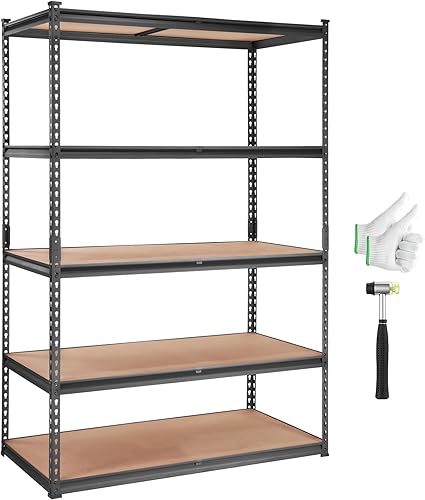
The VEVOR measures 48 x 24 x 72 in and has adjustable shelf heights. It can split into two racks, which may help fit storage around bins or tools.
Our guide to organizing garage shelves can help you group supplies and keep frequently used items easy to reach. Measure your bins and the shelf depth before settling on a layout.
How do you set up and care for garage shelves?
Set up either material on a stable, level surface, place heavy items low and check the unit or supports before loading it. Make sure shelves sit level and the frame is assembled as directed.
For metal units, lock beams or connectors into place as instructed. For a wood build, check that the supports sit level, the fasteners suit the material and the boards have support across their spans.
Leave enough clearance to reach bins and move stored items without scraping the finish or knocking shelves. Keep the heaviest supplies on lower shelves to reduce strain on upper levels and make everyday items easier to access.
With metal, check for chipped coating, rust, bent beams or loose connectors. Stop using a damaged upright or a beam that no longer locks securely.
With wood, look for soft areas, splits, swelling, sagging and loose fasteners. Replace a damaged board rather than hiding the weak spot with paint.
Both materials benefit from periodic checks for loosened connections, uneven loads and moisture. If the rack could tip or needs added stability, see how to anchor a garage shelf to the wall.
What mistakes shorten shelf life?
The biggest avoidable mistakes are ignoring moisture, overloading shelves and choosing a span or size that doesn't fit the room. Fix those decisions before adding bins and equipment.
Don't use a total capacity as the per-shelf rating. Don't place all the heavy items in one spot, and don't assume a wood board can span any width without sagging.
Avoid covering a leak or condensation problem with a shelf choice. Keep shelves clear of persistent water, and inspect their condition when the garage environment changes.
Measure the assembled rack location and the route into the garage before buying. A unit that won't pass through a doorway or fit beside a vehicle creates a storage problem before it holds anything.
How should you compare cost over time?
Compare the full setup and its upkeep, not just the material cost. A shelf that needs repairs or replacement may not be the better value over time.
Include supports, fasteners, finish and tools in a wood project. For a metal unit, account for the complete frame and any accessories or replacement parts you need.
A ready-made metal rack can save cutting and measuring. A wood shelf can make sense when you already have materials or need a custom width, as long as you plan supports before building.
For a broader material comparison, see wire shelving vs wood shelving. To compare metal with another low-maintenance option, read plastic vs steel garage shelves.
Which metal garage shelf suits your setup?
Choose by dimensions, shelf layout and stated capacity, then confirm the unit fits the route into your garage. Doorway width, floor space and shelf height can rule out a rack before its material does.
The RAVIGIN unit has adjustable shelves and a claimed total capacity of 5,000 lb. Its required doorway width is 71 in, so measure the route before choosing it.
If you prefer a narrower unit with a metal frame and solid boards, the VEVOR hybrid measures 48 x 24 x 72 in. Its stated total capacity is 2,000 lb, so compare that figure with the loads you plan to store.
Which material should you choose for your garage?
Pick metal if your garage gets damp or you want an adjustable, ready-made rack; pick wood if the space stays dry and you need a custom solid shelf. A hybrid can work when you want a metal frame and a solid board surface.
For wide metal storage, consider the WORKPRO. The VEVOR combines a steel frame and engineered wood boards, while the RAVIGIN offers an extra-wide metal frame with reinforced braces.
The practical rule for metal vs wood garage shelves is simple: choose for the garage conditions, then size the supports and shelf spans for your load. Use how to choose garage shelving to plan dimensions and layout before you buy.
Sources for material care
The USDA Forest Products Laboratory publishes guidance on wood and moisture. For metal, follow the shelf maker's care and loading instructions, and keep coated surfaces clean and dry.
Frequently asked questions
Do metal or wood garage shelves last longer?
Metal shelves often last longer in garages with humidity or occasional dampness because they don't absorb water like wood. A coated metal frame can still rust if its finish is scratched and moisture remains, while sealed wood can last well in a dry, ventilated space with sensible loads.
Are wood shelves strong enough for a garage?
Wood shelves can hold garage supplies when the boards, supports and fasteners are sized for the load and the shelf span. Avoid assuming every board has the same capacity; use sound lumber or panels, support long spans and keep heavy items close to the supports.
Can metal garage shelves rust?
Yes. A painted or powder-coated metal shelf can rust where its finish is chipped, especially if water or damp air stays on the surface.
Wipe spills, keep the unit away from persistent leaks and touch up damaged coating with a suitable product.
Which shelf material is easier to maintain?
Metal usually needs less routine sealing, while wood may need a protective finish renewed if it gets worn or damp. Both need occasional checks for loose connections, sagging, damage and overloaded shelves, and either material benefits from a dry location.