How Should You Store Storage Bins in a Garage?
For how to store storage bins in a garage, use a stable shelf or tote rack sized to your bins, group and label the contents, and keep heavy bins low. Measure the containers and clearances before setting up.
On this page (7 sections)
- How should you store storage bins in a garage?
- How do you choose shelves for storage bins?
- Should you use open shelves or a tote rack?
- How should you load and label garage storage bins?
- How can you keep garage bins easy to reach and in good condition?
- What common storage bin mistakes should you avoid?
- Which storage method should you choose?
For how to store storage bins in a garage, use a stable shelf or tote rack that fits the containers you own. Group bins by purpose, label the side facing the aisle, keep heavy loads low, and leave room to pull each bin out.
A workable system starts with the bins, not the empty wall. Measure the containers and the route to the rack, then choose a setup that leaves a clear aisle and keeps the things you use often within easy reach.
How should you store storage bins in a garage?
Group bins by use, label them clearly, and place them where you can reach them safely. Keep everyday containers around waist to shoulder height, and put heavy or bulky bins on lower levels.
Start by sorting the items you plan to keep. Make a separate group for holiday decorations, sports gear, car supplies, tools, or household overflow.
Give each bin one main purpose so you can find a category without opening several containers.
Put a short label on the side that faces the aisle. “Camping gear” is easier to scan than a long inventory, and labels are useful even when bins are clear or stored in low light.
Leave a little space around each bin. When a shelf is packed tightly, pulling one container out can shift its neighbors or make you lift things you meant to leave in place.
For a room-by-room layout, see how to organize garage shelves. The guide to garage storage shelves can help you choose between a freestanding rack, wall shelves, and other setups.
How do you choose shelves for storage bins?
Measure each bin's width, depth, and height before choosing a rack. Include lid rims and handles that stick out, then compare those measurements with the usable shelf space and clearance between tiers.
A container should sit flat with its base supported. Avoid shelves where the bin hangs over the front edge or has to be forced between uprights.
Check the rack's footprint against the aisle, parked vehicle, doors, and equipment that must remain accessible.
Measure the tallest bin with its lid in place. The gap above a shelf needs to let you slide the container out, not just squeeze it into position.
Adjustable shelves can help when your bins have different heights, but adjustment points and spacing vary by rack.
Shelf depth matters as much as width. Read what the standard depth for garage shelves is and compare it with your largest container before buying or rearranging a rack.
How deep should garage shelves be for storage bins?
Choose a shelf deep enough to support the bin from front to back, while keeping the garage usable. A deeper rack can suit larger totes, but takes more floor space.
Measure the bin itself and check the walking path, vehicle doors, and nearby equipment. Don't count on a lid or handle hanging over an edge to make a too-small shelf fit.
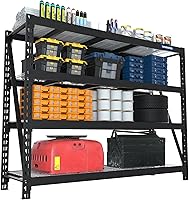
The REIBII 48-Inch Warehouse Shelving has 24 in deep shelves and adjustable tiers, making it a fit for large bins that need a deeper resting surface and for spaces that also hold tools or supplies. Its five tiers can be adjusted in 1.4 in steps, and the unit can be split into a 2-tier and a 3-tier rack.
Choose it if you want open shelves that can change as your storage needs change. Skip it if you have a narrow aisle or mostly want a dedicated rack where each bin slides out separately.
Should you use open shelves or a tote rack?
Use open shelves for mixed-size storage, and a tote rack when you want separate access to similar bins. The right choice depends on how your containers fit and how often you need what is inside.
Open shelves suit a garage where bins share space with equipment, boxes, or supplies. You can set the tier heights around your tallest items, but you may need to move a bin or two to reach something behind it.
A tote tower gives each container its own level. The CleverMade 5-Bin Tote Tower is designed for five standard 27-gallon totes, with individual slide-in access.
It measures about 31 in long, 23 in wide, and 68 in high when assembled, and each shelf supports up to 50 lb.
Choose it if you already use compatible totes and want to reach a lower one without lifting the bins above it. Skip it if your containers vary widely in size or if you need the same shelves for tools and other loose items.
The totes are not included, so account for that when planning the setup.
The FERO 27-Gallon Tote Rack also assigns one bin to each of five tiers. Its rails adjust from 18 1/8 to 20 1/2 in to fit different tote widths, and each tier supports up to 50 lb when evenly loaded.
Choose it if your tote widths fit its adjustable rails and you want a compact, dedicated bin system. Skip it if you need deeper shelves for broad or irregular items.
FERO gives standard vertical spacing of 16.5 in, so check your bins' height and the space needed to slide them out.
Tote capacity labels don't guarantee that every bin of that stated capacity will fit. Measure the width and height of your own containers, including handles and lids, before choosing either tower.
Compare more options in the best garage storage racks for bins, tools, and gear. If you're deciding what type of shelves to buy, how to choose garage shelving covers the main tradeoffs.
How should you load and label garage storage bins?
Put heavy bins low, distribute contents across the shelf, and label each container before it goes into storage. This keeps lifting manageable and makes the system easier to use.
Follow the rack's assembly instructions and its stated weight limit. Spread heavy items over the shelf instead of concentrating them in one spot, and don't assume the whole unit's capacity is the limit for each individual tier.
Place frequently used bins at a comfortable height and nearer the front of the rack. Seasonal or rarely used containers can go higher if you can bring them down safely without standing on the rack or reaching over a vehicle.
Choose a label you can read from the aisle. If one bin holds several types of items, label it with the main category and add a short note for the contents you need most.
How can you keep garage bins easy to reach and in good condition?
Keep the aisle clear, place regular-use bins where you can slide them out, and store containers on a dry, stable surface. These steps make the system safer and reduce the chance that you need to rearrange the rack for routine access.
Before loading, check the floor under the rack for uneven spots and keep bins away from areas where water pools. Close lids before storing containers, and inspect the garage for leaks or damp areas when you do seasonal cleanups.
Don't overload a tote beyond what you can safely lift. For dense contents such as tools, use a smaller bin or put it on a lower shelf.
Cover sharp edges or place them in a smaller box inside the tote to reduce snags.
Leave space in front of the rack to pull bins out. Test the path with the largest container, and make sure it won't hit a car, doorway, or other stored items.
What common storage bin mistakes should you avoid?
Avoid buying a rack before measuring your bins, overloading shelves, and storing heavy containers out of reach. Each can make a neat-looking system hard to use or unsafe to access.
Don't measure only the plastic body. A lid lip, latch, or handle can add width or depth, and a bin that fits between rack uprights may still be difficult to slide out.
Don't treat every 27-gallon tote as the same size. Check each bin against the rack rails and shelf opening, especially when mixing brands or older containers.
Don't stack containers so high that you need to climb or strain to reach the top. A dedicated tote rack or lower shelf can make frequently used bins easier to retrieve, while stable lidded stacks can work for occasional-use items if you can reach them safely.
Don't fill every open spot on day one. A little unused space gives you room to add a seasonal bin or reposition a shelf without rebuilding the whole setup.
Which storage method should you choose?
Choose open shelving if your bins vary in size or share space with tools and supplies. Choose a tote rack if you use compatible 27-gallon bins and want to access them one at a time.
For how to store storage bins successfully, measure the containers, rack opening, and aisle before you set up; put heavy bins low; and label every bin where you can see it. Use how to organize garage shelves to plan where each group belongs.
Frequently asked questions
Should storage bins go on shelves in a garage?
Yes, shelves can keep bins off the floor and make them easier to sort and reach. Choose shelves with enough depth and clearance for your containers, keep heavy bins on lower levels, and follow the rack's assembly and load instructions.
How do you keep garage storage bins organized?
Group bins by use, such as seasonal items, tools, or sports gear, and label the side that faces the aisle. Keep frequently used bins at a comfortable height, and leave room to slide them out without moving other containers.
Is it safe to stack storage bins in a garage?
Stack bins only when their shape and lids support stable stacking, and keep the stack low enough to reach safely. Put heavier containers at the bottom, avoid uneven floors, and use a shelf or tote rack when you need regular access.
How deep should garage shelves be for storage bins?
Measure the bin from front to back, including any lid or handle overhang, then choose shelf depth that supports it without an unstable edge. Check that a deeper shelf won't block a walkway, vehicle door, or garage door.